
CYCLE II | The (r)evolution of comic book authors [4/4]

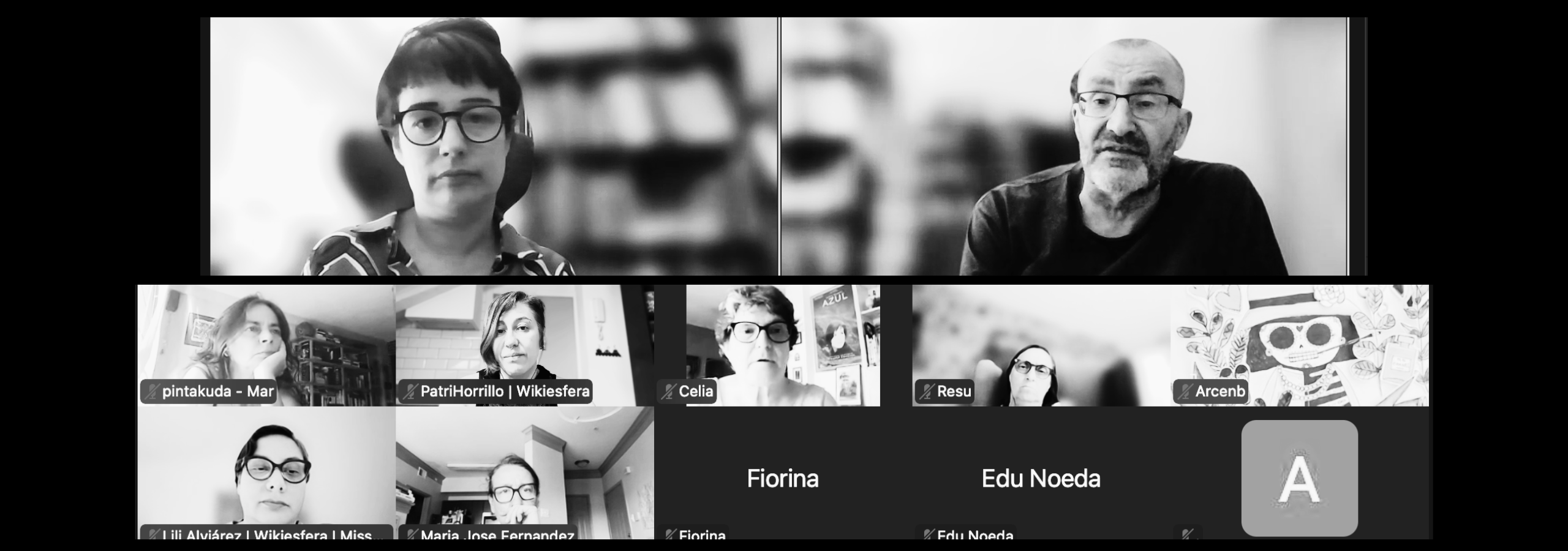

Last Wednesday, June 10, we continued with the project “Visitising comic book illustrators and artists on Wikipedia”, coordinated by Wikisphere and funded by the Women's Institute. The fourth and final session of the CYCLE II | The (r)evolution of comic book authors: From Classicism to Modernity, driven by Elisa McCausland y Diego Salgado, He took a leap to Japan to explore how women built manga as we know it today.
> Listen to the session
We will record all the dissemination sessions of this project that we will organize in several bookstores in Madrid.
Also, you can follow our IVOOX Channel so you don't miss any.
> Summary
Before talking about authors, Elisa McCausland and Diego Salgado explained that the term manga literally means ‘informal drawing’, a popular, fast and expressive drawing, away from any elitist pretense. Modern manga is born from the fusion between a long Japanese illustrative tradition (dating back to the 12th century) and the influence of American comics that came after the occupation of the United States at the end of World War II. Osamu Tezuka, considered the father of modern manga, is the best example of that fusion: His kinetic style owes much to Disney.
The first major female figure in postwar manga is Machiko Hasegawa, creator of Sazae-san. Working from the domestic space, Hasegawa achieved an economic independence that functioned as a strategy of freedom: He controlled all the rights of his work and its derivatives, something exceptional for the time. Sazae-san It also became one of the first multimedia phenomena in history: from comic strip to anime weekly and movies.
Many mangakas They have deliberately maintained a very low public profile, without photographs or known date of birth, as a strategy against the social scrutiny received by women with public power in Japan. Masako Watanabe (in Japanese), on the other hand, introduced an aesthetic stylization and a level of detail that would be the germ of aesthetics. kawaii: pastel colors, rounded shapes. And although the comic aimed at teenage girls, called shōjo, was initially dominated by male authors, the readers themselves quickly identified a different sensitivity in the works made by women, which boosted their entry by market demand.
Born in 1949, the authors of the call Generation of 24 They grew up in postwar Japan, influenced by counterculture, student movements, and second-wave feminism. His most significant contribution, in addition to the quality of his works, was organizational: They created their own production structures, exclusively female collectives, independent of male-dominated studies. Among its most prominent figures are Moto Hagio (Who's passenger number 11?), Keiko Takemiya (The Ballad of the Wind and the Trees) and Riyoko Ikeda (The Rose of Versailles).
In the 1980s, the Japanese technological boom popularized Japanese culture in the West, and with it came massive interest in Japanese culture. manga and the anime. Rumiko Takahashi, with Ranma ½, played with the gender change of the protagonist. Naoko Takeuchi reached with Sailor Moon Such a massive success that she was forced to create her own production studio. And the collective CLAMP took the authorship organization a step further, coming together to negotiate copyright and exploitation. Already in the 90s, a countercultural scene emerged on the Internet gave rise to authors who broke all the generic encodings of the medium, producing a more torn and free manga than that of the previous decades.
The session did not elude the hardest face of the manga as industry: It works through industrialized studies, where the author or lead author leads and a team of assistants is in charge of funds and secondary tasks under extremely demanding deadlines. The working conditions are precarious to the extent of documenting cases of death on the drawing board itself, a reflection of a Japanese work culture with hardly any limits. The manga, originally intended for internal consumption, works as a escape route in a society strongly codified by gender and productive and reproductive roles; And censorship of the bodies on its pages is, to a large extent, a legacy of postwar and American cultural colonization. Feminism in Japan, it was pointed out, remains today a complex and problematic terrain, although with signs of change.
This session closes on CYCLE II | The (r)evolution of comic book authors: From Classicism to Modernity. The third cycle will come after the summer, already in face-to-face format, in the Bookstore Dream Traffickers Madrid, with four new sessions between September and November.
> Bibliography
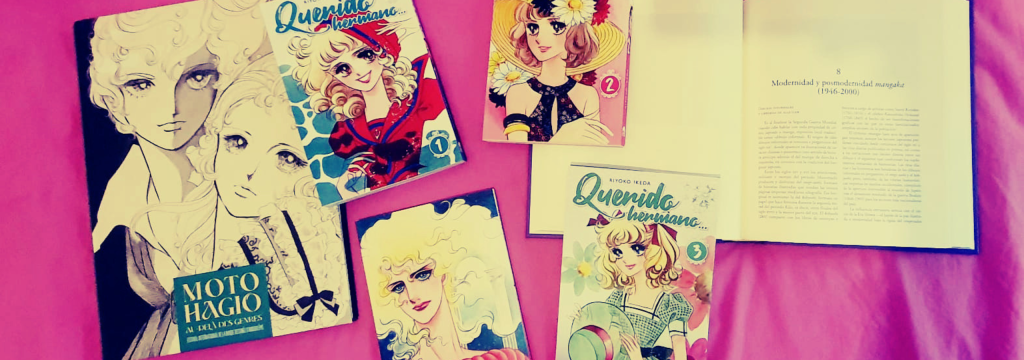
During the session, the following works were mentioned:
- 1946 – Sazae-san Machiko Hasegawa 's
- 1972 – The Rose of Versailles Riyoko Ikeda 's
- 1975 – Who's passenger number 11? Moto Hagio 's
- 1976 – The Ballad of the Wind and the Trees Keiko Takemiya 's
- 1987 – Ranma ½ Rumiko Takahashi 's
- 1992 – Sailor Moon Naoko Takeuchi 's
> Collaborate

> Finance

Other Work


 English (UK)