
Editatone of Aragonese in cultural heritage #19S | [WikiAragon]

> Theme
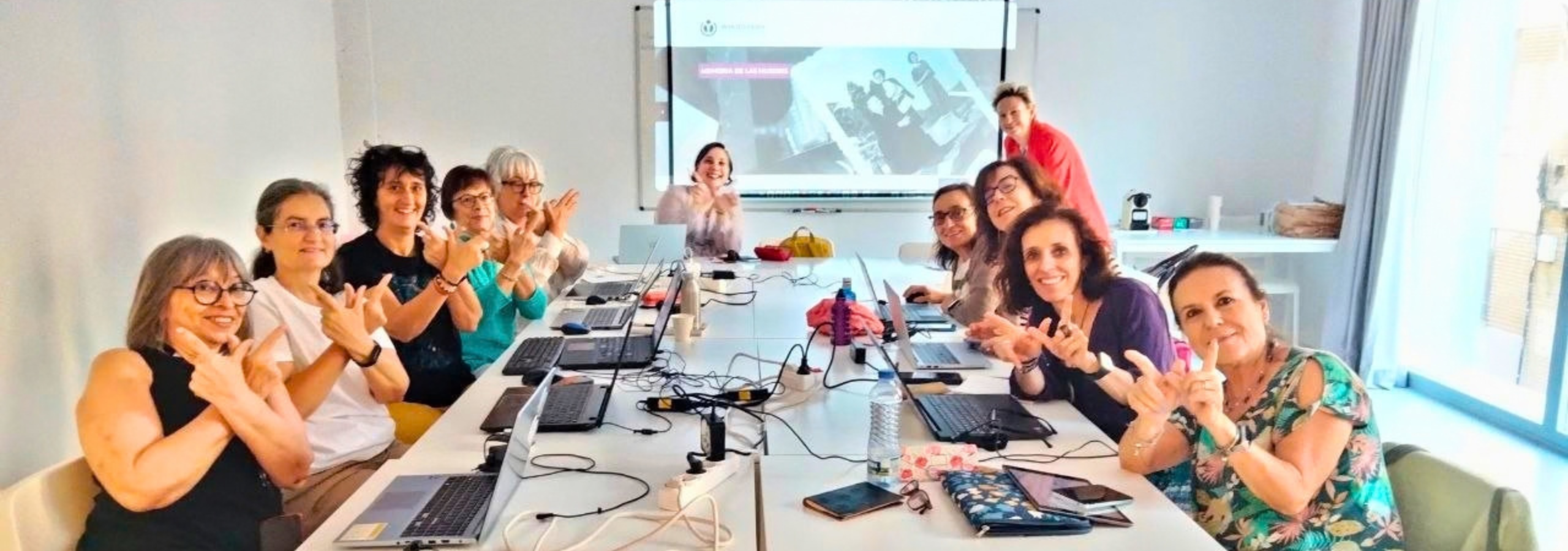
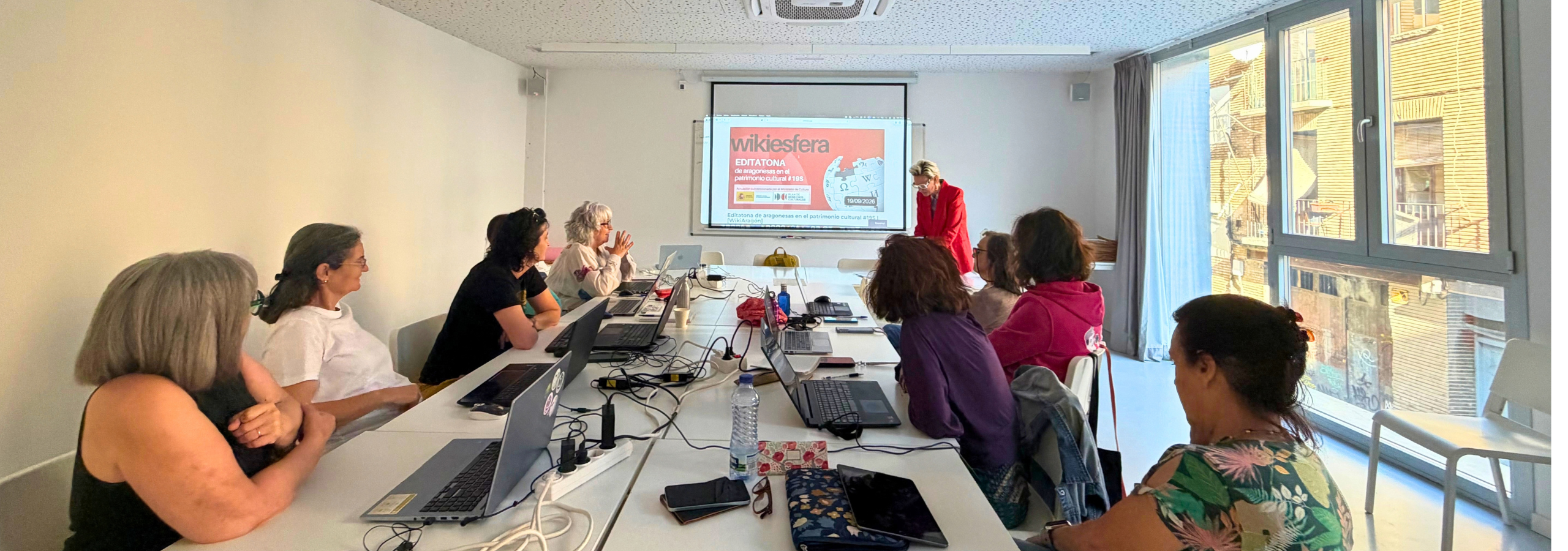
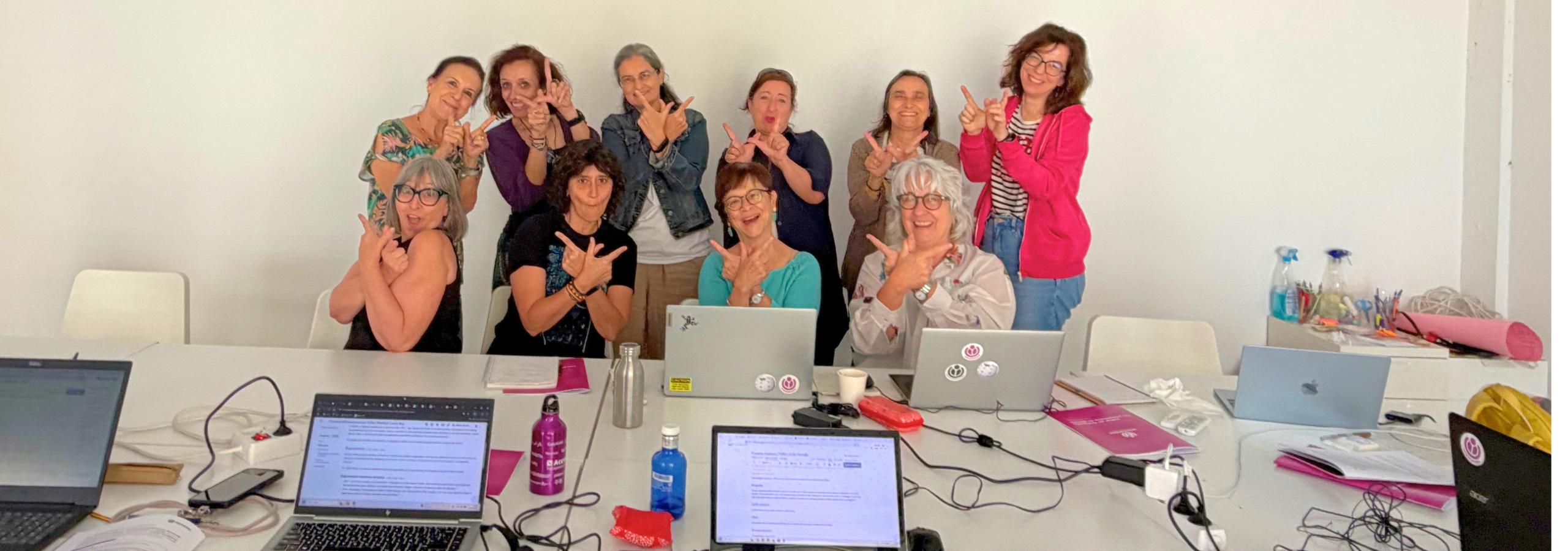
The past Saturday 19 September, we are in Zaragoza to celebrate the Editatone of Aragonese in cultural heritage. The activity was organized by Wikisphere next to the territorial node WikiAragon (@WikiAragon) and the the Aspasia Community of LAAAB Aragon Laboratory [Government] Open (@Laaab), and was subsidized by the Ministry of Culture, within the framework of the project “Creating free knowledge communities with a feminist approach”, co-financed by the Wikimedia Foundation.
The activity took place in the Stanbrook Lay Athenaeum It focused on researching, creating and improving content on women linked to Aragonese cultural heritage. Building on the initiative of the local community , on the women present in the street of Zaragoza, the day broadened the look towards women related to the arts, architecture, literature, music, archaeology, conservation and the cultural sector in general.
This editatone adds to the work Wikiesfera is developing for strengthen local publishing communities and consolidate sustainable and autonomous territorial nodes. In this case, the activity contributed to continue promoting WikiAragón as a space for meeting and participation around free knowledge with a gender perspective in its territory.
In addition, allowed the connection between the different nodes of Wikisphere through the exchange of participants, encouraging experiences and learning to circulate between the different communities, with the presence of two fellow volunteers from the Madrid group.
It was a space for sharing tools and knowledge to make the legacy of Aragonese women more visible on Wikipedia, generating new content and improving those that already existed. The collective work highlighted the importance of continuing to incorporate a gender perspective into the documentation and dissemination of cultural heritage.
As part of the day, we give the participants the graphic novel Feminist Art, by Valentina Grande and Eva Rossetti, as a recognition and gratitude for their time, their work and their participation in the editatona.
> Expert
During the day he accompanied us Beatriz Lucea Valero, art historian, cultural consultant and museum specialist in museums and cultural heritage. He told us about his professional career in Aragon, the networks he has created over the years and his particular way of working with culture, art and heritage.
One of the ideas that most connected with the editatona was his way of understanding museography. His work goes far beyond “hanging a picture”, really consists of finding the best way to tell a story to capture attention, arouse curiosity and make those who contemplate it raise new questions. He also claimed the importance of observe and maintain curiosity, because stopping to look can help us discover beauty where we did not see it before.
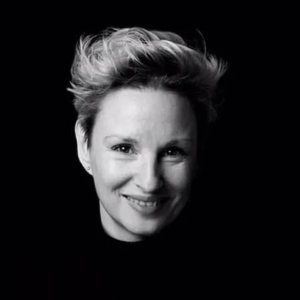
Her own experience led us to talk about the role of women in culture. He recalled that, when he studied Art History, He didn't study any women.. Today, however, it seeks almost intuitively to work with or about female artists. A way to open the way where during his formation there was hardly any.
He also left a question on the table Where are the women in the culture? There are, and there are many, but there are still few who reach the spaces where decisions are made. For her, that's one of the changes we still have ahead of us.
From this reflection, the talk became a conversation with the participants, who shared their own experiences and points of view. We talk about opportunities, recognition and the role we want women to play in culture, giving space to other stories and asking ourselves who tells them.
> Results
- Number of PARTICIPANTS: 12
- Number of articles PUBLISHED: 17
>> Articles created: 12
- Angelita Vidal: Spanish jotera.
- Beatrice Bernad: Spanish jotera.
- Beatriz Lucea Valero: Spanish art historian, museum designer, curator and cultural manager.
- Concha Lomba: PhD in art history and Spanish professor.
- Ester Vallejo: Spanish singer, percussionist and composer.
- Felisa Galé: Spanish jota singer.
- Julia Dorado: Spanish abstract painter.
- Maribel Lorén Ros: Spanish painter and engraver.
- Mónica Vázquez Astorga: art historian, researcher and Spanish professor.
- Pilar Delgado: Spanish actress and theatre director. Founder of the theatre group The Taguara.
- Pilar Moré: Spanish painter and plastic artist.
>> Translated articles: 5
- Alicia Vela: Spanish painter and engraver.
- Maria Teresa Moret Oliver: Linguist and PhD in Spanish Hispanic Philology.
- Mercedes Laguens García: Spanish plastic artist.
- Pilar Utrilla Miranda: historian and professor of Spanish prehistory.
- Silvia Márquez Chulilla: harpsichordist, organist, fortepianist and teacher of Spanish classical music.
> Collaborate



> Finance





 English (UK)