
Women of Zarzuela 2025



> Theme
In February of this year, since Wikisphere and in coordination with the Teatro de la Zarzuela (@teatrodelazarzuela), we launched the course Women of Zarzuela to make visible to relevant women in the history of zarzuela and Spanish lyrics on Wikipedia through the creation, translation and improvement of different articles.
Before the beginning of the course were held meetings with experts from the world of zarzuela to map outstanding biographies that do not yet have a presence on Wikipedia in Spanish.

This course, which was presented in February, was offered to teachers and students of music subjects of six universities Spanish: the University of Alcalá (UAH), the Autonomous University of Madrid (UAM), the Complutense University of Madrid (UCM), the University of Granada (UGR), the University of Oviedo (UNIOVI), the University of Salamanca (USAL). The aim was to involve researchers in the development of biographies and train them in the use of digital technologies to edit Wikipedia and thus contribute to creating an accessible and diverse knowledge community.
We design a training process consisting of four virtual sessions in which the keys to editing Wikipedia with a gender perspective, the use of reliable sources, the translation of content and the correct structuring of an encyclopedic article were addressed. As a closure of the process, we organize a virtual editatone in May 2025 in which participants applied what they learned by creating, translating and improving entries on women in zarzuela, thus contributing to expanding accessible and free knowledge about Spanish lyrics.
The results of this first edition of the project Women of Zarzuela They have been very interesting because they have allowed us to see the potential of both the subject and the involvement of the cultural and educational institutions that have participated. We see this experience as a first step to develop other types of formations with more extension and depth, and achieve a retention in the number of editors who approach Wikipedia through this system.
> Results
- Number of PARTICIPANTS in the course: 25
- Number of articles PUBLISHED: 18 [ CREATED: 10 | TRANSLATED: 8 ]
- Number of articles IMPROVED: 8
- Number of images RELEASE: 22
- Number of Wikidata items CREATED: 10
>> Articles created: 10
- Adelaide Latorre (19th century)
- Nativity of Rojas and Ortiz de Zarate (19th century)
- Luisa Fons Ruiz (1867-1925)
- Lucia Pastor Ramos (1868-1960)
- Remedies Jungle and Tower (1877-¿?)
- Carmen López Peña (1885-1941)
- Felisa Herrero López (1905-1962)
- Enriqueta Serrano Arenas (1911-1958)
- Maruja Vallojera (1918-21st century)
- Pepita Rollan (1920-1994)
>> Articles translated in Spanish: 8
- Luisa Santamaria Moreno (disambiguation) (1827-1883)
- Teresa Istúriz and Coca (1830-1874)
- Adelaide Montañés Soriano (1839-1898)
- Josefa Murillo and Bravo de Vela (1840-¿?)
- Mercedes Ubach Solà (1869-1935)
- Candida Perez Martinez (1893-1989)
- Carmen Tur Melchor (1899-1943)
- Cecilia A. Mantua (1905-1974)
>> Articles improved: 8
- Trinidad Ramos (c. 1835-1863)
- Isabel Brú (1874-1931)
- Luisa Vela Lafuente (1884-1938)
- Maria Rodrigo Bellido (1888-1967)
- Lola Palatine (1888-1971)
- Adela Anaya Ruiz (1890-1970)
- Conchita Panadés Juanengo (1908-1981)
- Dolores Marco Seseras (1935-2005)
> Images
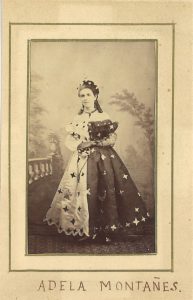
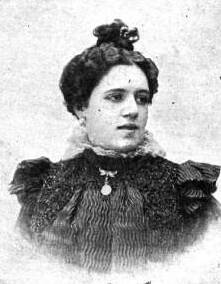
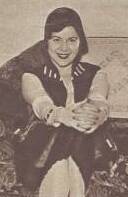
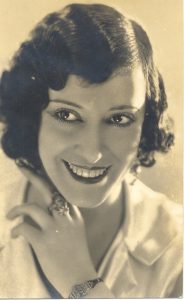
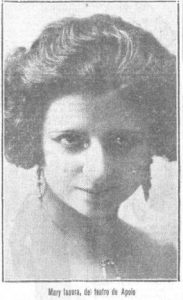
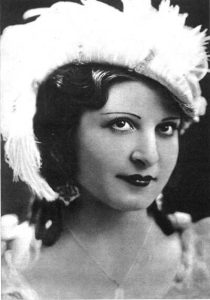
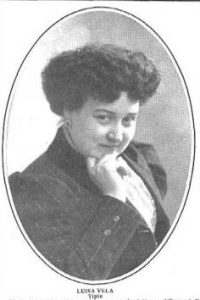
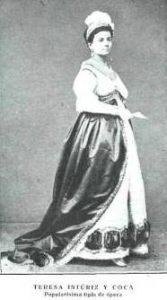
In this first edition of the project, the Teatro de la Zarzuela made specific efforts to address it. After a meeting with the team of the National Library of Spain (BNE), the institution released 15 images linked to women of the Spanish lyrics, who have been incorporated into the articles that needed them, significantly improving their visibility. In addition, the National Museum of Performing Arts Almagro also joined this initiative, freeing 7 images They are already part of the articles published on Wikipedia as a result of the project.
These 22 images released, which can already be seen in the category Category:Supported by Wikiesfera – Women of Zarzuela, represent an important step to visually enrich the free encyclopedia and allow the biographies of these women not only have reliable and verifiable sources, but also with a face that represents them. The collaboration of public archives and museums with projects like this demonstrates the value of opening up documentary heritage to drive fairer and more diverse representation in digital spaces of knowledge.


> Collaborate




 English (UK)