
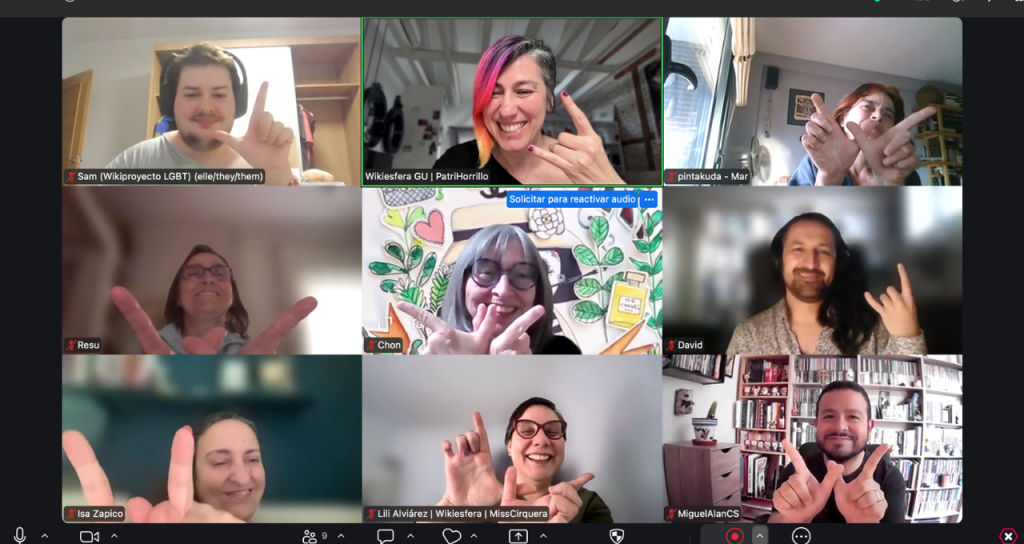
On Wednesday, April 8, we had a OpenRefine Introduction Workshop with David Ramírez Ordóñez (@hyperterminal), in which we explore how to work with structured data from a feminist and queer perspective. The session combined a technical part (how to clean, organize and reuse data) with a critical reflection on who produces that data, what inequalities it reflects and how we can intervene to build fairer and more plural knowledge.
> How OpenRefine works
OpenRefine is a free software This allows you to work with datasets in a structured way. During the workshop we saw its potential to clean up information, detect errors, reconcile data with Wikidata and perform massive loads. One of the key concepts was the reconciliation, the process of linking our data with existing elements in Wikidata, something fundamental to avoid duplication and improve the quality of information. Good practices and complementary tools to work more safely in bulk shipments were also addressed.
> Feminist data, queer data: looking at (and changing) what's missing
Beyond the technical, the workshop focused on the data as a power space. Based on the principles of data feminism, we work on the importance of questioning biases, incorporating context and making absences visible. A clear example was the analysis of public domain in Colombia, where just between a 2% and a 4% of the persons registered are women. This type of data not only shows inequalities, but also opens opportunities to act: create articles, improve content or recover historically invisible figures.
You can consult the presentation here and we leave you the video below:
> Resources
>> Tools and platforms
>> Projects and examples mentioned
- Visibilizing the Colombian public domain on Wikidata
- People in the public domain of Colombia according to their gender
- Wikidata:WikiProject Making the Colombian public domain visible
- Collaborative work methodology on Wikidata
- The World Map of Libraries and the visualization of data availability in Colombia
- Category:Colombia WikiProjects (Wikidata)
- Wikidata:WikiProject Public Domain in Latin America
>> References
- 2020 | Data Feminism | Catherine D’Ignazio and Lauren Klein
- 2022 | Queer Data: Using Gender, Sex and Sexuality Data for Action | Kevin Guyan

 English (UK)