
CYCLE I | Pioneers of illustration and comics [4/4]

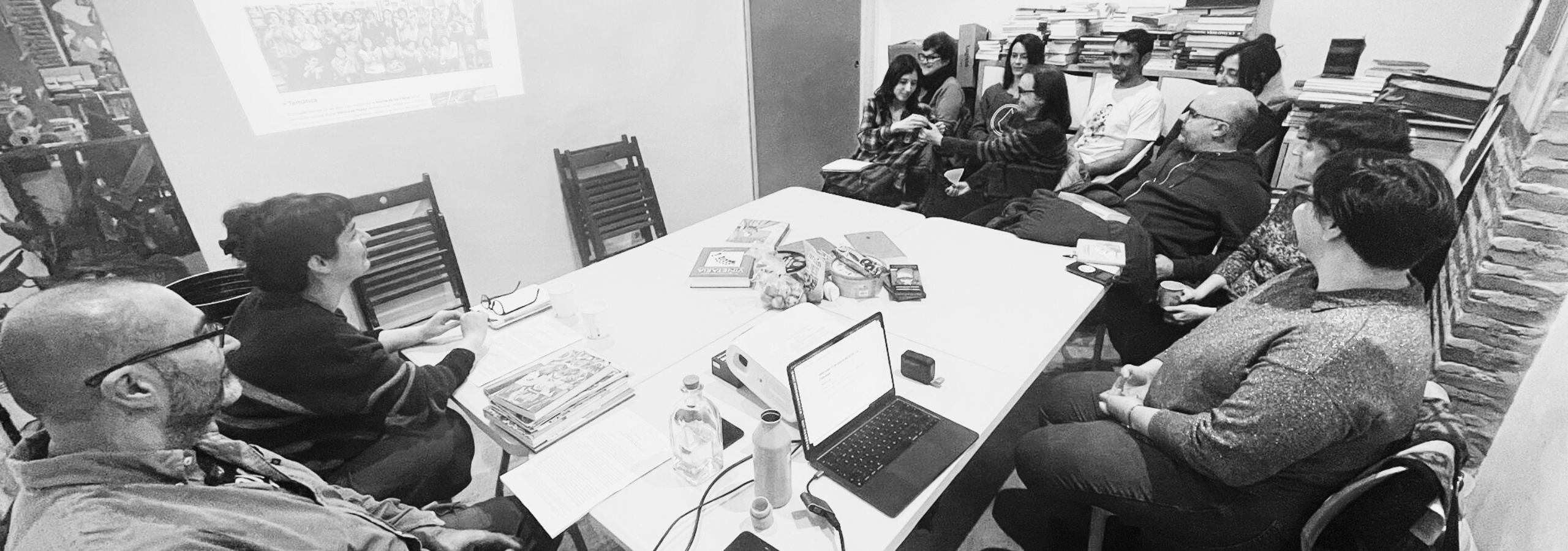


Last Wednesday, March 11, we continued with the project “Visitising comic book illustrators and artists on Wikipedia”, coordinated by Wikisphere and funded by the Women's Institute. The fourth session of the CYCLE I | They were always there: Pioneers of illustration and comics , driven by Elisa McCausland y Diego Salgado, closed the tour dedicated to the pioneers of illustration and was dedicated to the passage of the press strips to the comic book and the role of women in industry during the 1930s and 1940s. The talk addressed the appearance of superheroines such as Wonder Woman, the female archetypes of the war comic and the subsequent rise of romantic and youth comics.
> Listen to the session
We will record all the dissemination sessions of this project that we will organize in several bookstores in Madrid.
Also, you can follow our IVOOX Channel so you don't miss any.
> Summary
Elisa McCausland and Diego Salgado explored in this last session of the first cycle of dissemination how the passage of the press strips to the format of the comic book It opened up new narrative possibilities and changed the reading public. The first comic books emerged as compilations of syndicated strips, whose authors had ceded the rights to the newspapers, but soon became a space where they experimented with longer stories and developed the language of the comic.
In this new publishing ecosystem, the presence of women was initially marginal: Only a dozen worked each year in the American comic book industry. However, the Second World War It was a turning point. The mobilization of men at the front opened up job opportunities and there were up to ninety women working in different areas of production, although many did so in invisible tasks (such as coloring) or signing with a pseudonym so as not to compromise their reputation in other editorial fields.
The session also addressed the female archetypes which proliferated in these years. Figures like the pin-up (idealized, stylized and ubiquitous in war iconography) coexisted with adventurous characters such as the so-called jungle girls, including Sheena, or with superheroines who were part of an imaginary deeply traversed by the political context of the moment. Within this framework, the creation of Wonder Woman, designed by William Moulton Marston next to Elizabeth Holloway y Olive Byrne, whose initial philosophy was based more on will, truth, and sorority than on physical force. Characters such as Miss Fury, The Blonde Bomber or the International Squadron of Girl Commandos, examples of how comics participated in the construction of a propaganda narrative during the war.
The end of the contest once again transformed the editorial landscape. The moral crisis that culminated in 1954 with the publication of The Seduction of the Innocents from Fredric Wertham resulted in a system of self-censorship articulated from the Comics Code Authority that infantilized a lot of content. At the same time, other genera such as Romantic Comics and publications aimed at adolescents, responding to the emergence of a new consumer and social figure: youth. Characters as Patsy Walker or authors as Ruth Atkinson show how these narratives addressed everyday conflicts (labor, sentimental or family) that today are part of a cultural heritage still little studied.
As in previous sessions, the meeting concluded with a reflection on the historical recovery work which still needs to be done. Some authors mentioned have little accessible information or have no articles on Wikipedia. Therefore, the project will continue with editing workshops where participants can create, translate or improve entries dedicated to these creators, contributing to reconstruct a genealogy that demonstrates that, also in the history of comics, women were always there.
> Bibliography
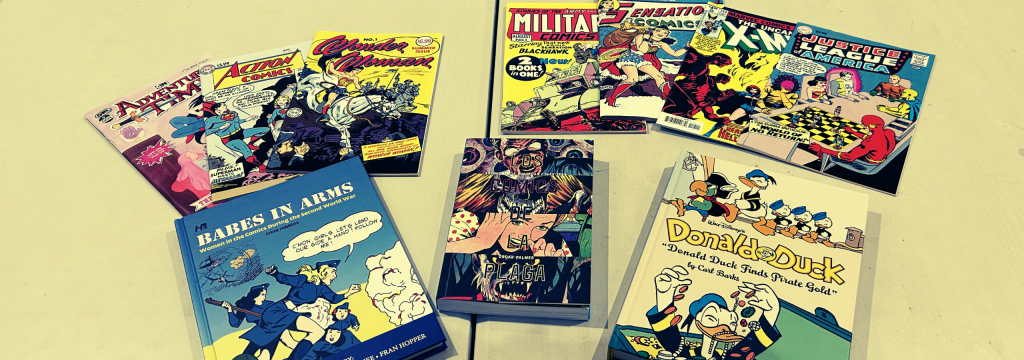
During the session, the following works were mentioned:
- 1954 – The seduction of the innocent. Fredric Wertham
- 1921 – Love Story Magazine. Edited by Daisy Bacon (in English)
- 1993 – A century of women cartoonists. Trina Robbins. Kitchen Sink Press
- 2017 – Babes In Arms: Women in the Comics During World War Two. Trina Robbins. Hermes Press
- 2018 – Teenage: The Invention of Youth, 1875-1945. Jon Savage (in English). Awakening Ferro Editions
- 2018 – The plague comics. Cover anthology 1942-1954. Oscar Palmer (disambiguation). It's Pop Editions
> Collaborate


> Finance

Other Work



 English (UK)