
CYCLE I | Pioneers of illustration and comics [1/4]

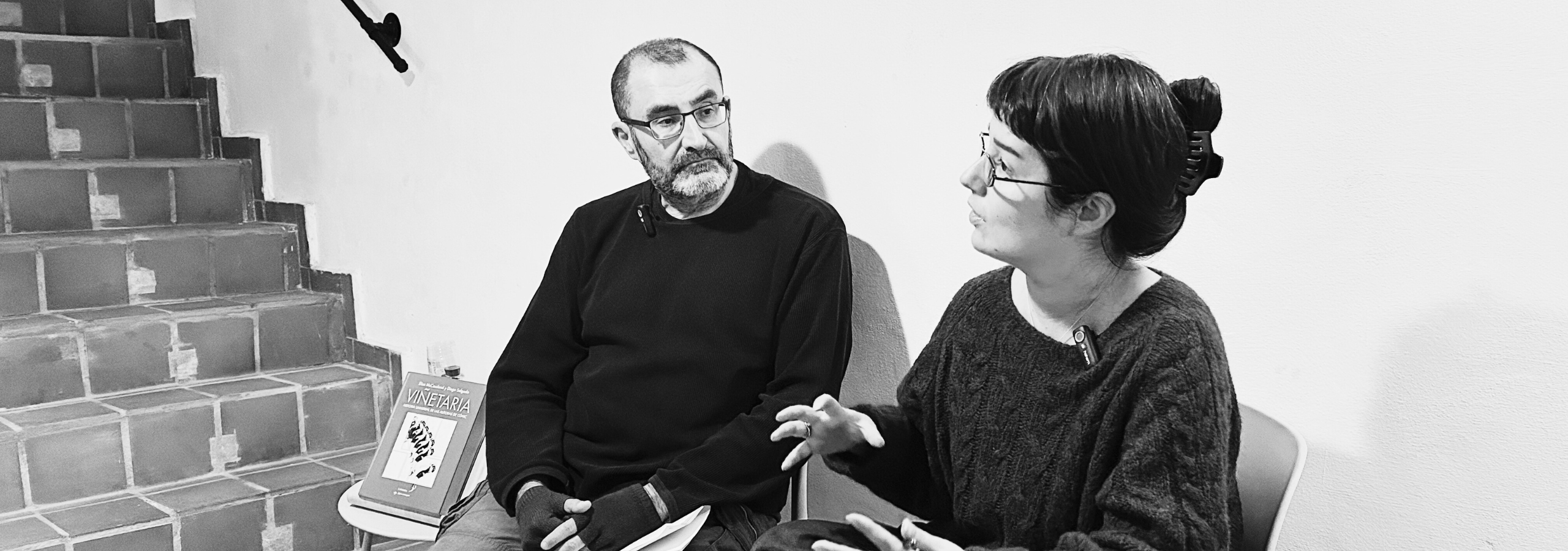


Last Wednesday, February 18, the project started “Visitising comic book illustrators and artists on Wikipedia”, coordinated by Wikisphere and funded by the Women's Institute. The first session of the CYCLE I | They were always there: Pioneers of illustration and comics It was an invitation to look again at the history of the … image and to analyze it from the present.
Driven by Elisa McCausland y Diego Salgado from your book Vineyard: universal story of comic book authors, the session opened a cycle of four meetings (two in February and two in March) combining historical outreach with concrete action: Wikipedia editing workshops to create and improve biographies of illustrators. Because the goal is not just to know their names, but to make sure they stay.
> Listen to the session
We will record all the dissemination sessions of this project that we will organize in several bookstores in Madrid.
Also, you can follow our IVOOX Channel so you don't miss any.
> Summary
Elisa McCausland and Diego Salgado proposed a change of approach: against the canon (which selects, ranks and excludes), work from the genealogy, which connects, contextualizes and expands the map. They rejected the "erotic of exception", that temptation to celebrate a single brilliant author while keeping intact the structure of invisibilization, and defended the importance of understand the material, technological and political conditions that made possible the work of so many creators. It's not just about proper names, but about networks, creative families, duo and editorial ecosystems.
The historical journey started long before modern comics. From the Medieval Illuminators until botanical and scientific illustrators in court contexts, women were actively involved in the production of images, although often from spaces considered “minor” or as supposedly amateur activities. Paradoxically, those marginal assignments (such as children's illustration, decorative or fashion) ended up opening paths of professionalisation and economic autonomy, even when they did not confer cultural prestige.
With the advent of modernity and the expansion of mass culture in the 18th and 19th centuries, image became a central language for thinking as a society. Illustrated press, fashion magazines and children's publications were areas where many women found a place, in a context of growing literacy and technological revolution in printing. However, this invisible mainstream, consumed by millions, was left out of the official accounts of art history, more concerned with academic painting than with reproducible illustration.
The session also underscored the political and subversive power of images. Before we even know how to read, we learn to look, and that power explains why images have been subject to greater censorship than texts throughout history. Illustration and comics, far from being separate disciplines, have been united from the beginning: a single vignette can condense a complete narrative. To recognize that continuity is also to recognize that the authors were always there, shaping the collective imagination.
> Bibliography

During the session, the following books were mentioned:
- 2023 – They illustrate botany: art, science and gender. Coordinates Toya Legido. CSIC
- 2023 – Be a man. Masculinities in 19th century Spain. Coordinates Darina Martykánová. University of Seville
- 2025 – Portraited: Photography, genre and modernity in the 19th century Spanish. Stéphany Onfray. chair
- 2026 – Miss Charity: The first adventures of a young cartoonist. Loïc Clément and Marie-Aude Murail, illustrations by Anne Montel. Errata Naturae
- 2026 – Woman as the human. At the beginning of the story. Ulli Lust. Garbuix Books
> Collaborate


> Finance


 English (UK)