
CYCLE I | Pioneers of illustration and comics [3/4]

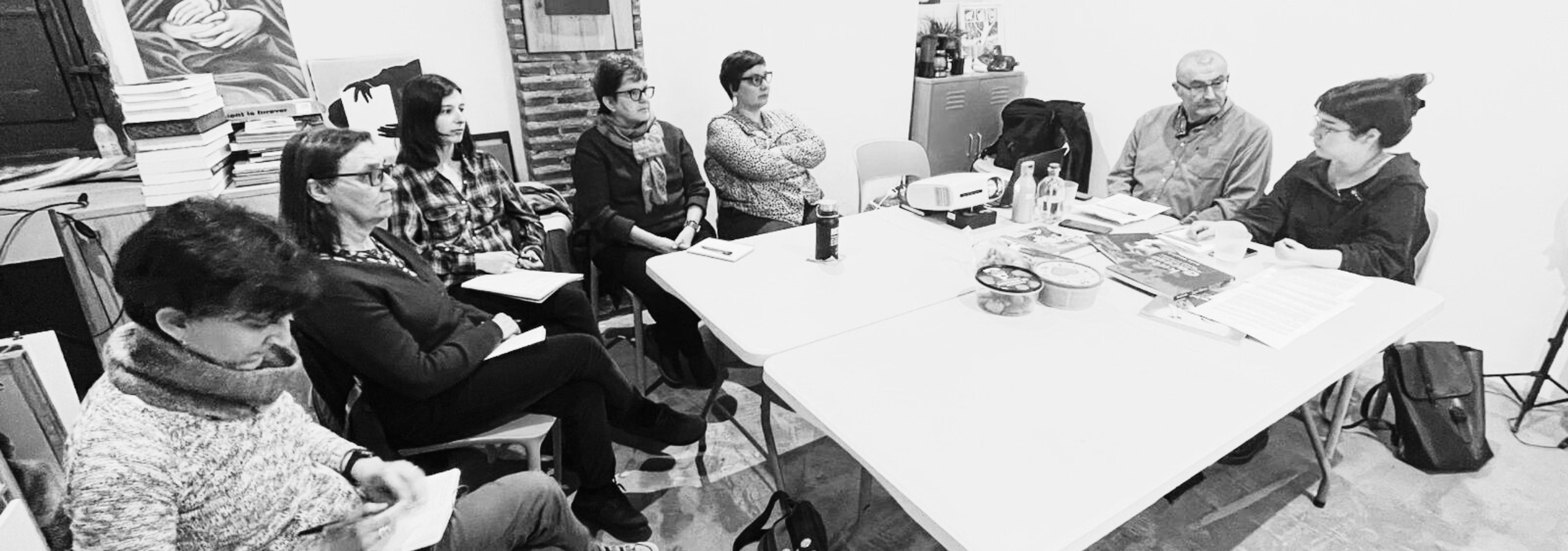


Last Wednesday, March 4, we continued with the project “Visitising comic book illustrators and artists on Wikipedia”, coordinated by Wikisphere and funded by the Women's Institute. The third session of the CYCLE I | They were always there: Pioneers of illustration and comics , driven by Elisa McCausland y Diego Salgado, revolved around the press strip as the origin of modern comics and the authors who managed to break through in this competitive editorial system with an "indirect feminism".
> Listen to the session
We will record all the dissemination sessions of this project that we will organize in several bookstores in Madrid.
Also, you can follow our IVOOX Channel so you don't miss any.
> Summary
During this session, Elisa McCausland and Diego Salgado explained how the press strip was a new form of visual storytelling based on the sequence of vignettes, who soon developed a language of his own. The strips functioned as a form of artistic expression, where the narrative and visual style of the author took on great importance. They also talked about the operation of the Industrial System syndication (in English), by which the agencies distributed press strips to numerous newspapers simultaneously. This model allowed a huge diffusion but also involved complex working conditions: artists often lost rights to their works and worked in an extremely competitive environment.
In this context, numerous authors emerged who managed to break through in a field dominated by men. Although it is estimated that around Ninety women worked in press strips during the classical period, many of them did so in conditions of inequality and with thematic limitations associated with gender roles. However, many of these creators practiced what they called “indirect feminism”: a form of subtle subversion that operated within the social codes of the time, introducing humor, irony and new female representations without explicit confrontation.
Among the prominent authors, mention was made of Marge Henderson Buell, creator of the character of Little Lulu, who not only designed the protagonist but, once achieved success and fame, was responsible for supervising the entire production process of the strip elaborated by other artists. The work of Martha Orr, whose comics reflected the social tensions of the Great Depression; a Gladys Parker, author of Mopsy (in English), which combined humor, fashion and sophistication in their stories; a Jackie Ormes, one of the first African-American cartoonists, whose characters offered black girls representations away from dominant racial stereotypes; a Dale Messick (in English), creator of Brenda Starr, Reporter (in English), an adventurous journalist; or to Tarpé Mills, creator of action heroin Miss Fury.
The session also explored phenomena such as the merchandising associated with the strips, especially Trimmable dolls paper designed by the authors themselves. These materials allowed many girls to imagine other lifestyles and aspirations, turning popular culture into a space of imagination and social projection. The use of pseudonyms by some creators, who preferred to hide their identity by considering the comic a form of minor culture compared to other more prestigious artistic fields.
Finally, we reflected on the relationship between popular culture and cultural legitimation. For decades, comics were considered a lesser form of entertainment, making it difficult to recognize them as art. Paradoxically, this lack of legitimacy allowed greater creative freedom at certain times. The session concluded by noting how the authors of the Second Wave Feminist Underground Comics They explicitly recognized the influence of these pioneers, recovering their legacy and placing it in the history of the medium.
> Bibliography
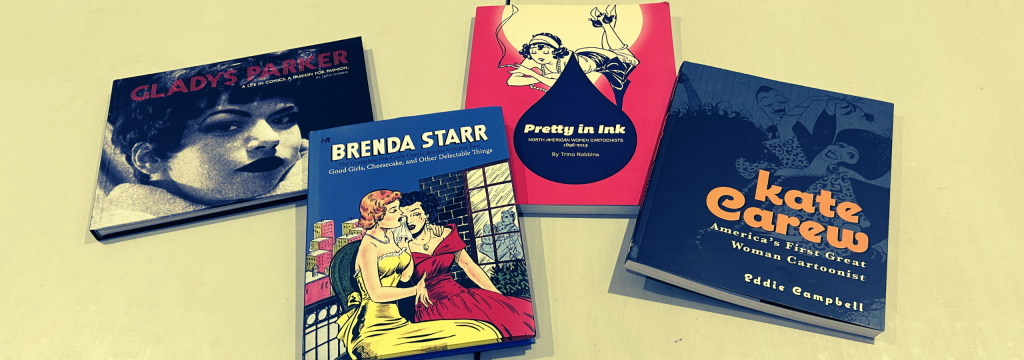
During the session, the following works were mentioned:
- 2013 – Pretty in Ink: North American Women Cartoonists 1896–2010: North American Women Cartoonists 1896-2013. Trina Robbins. Fantagraphics Books
- 2015 – Brenda Starr: The Complete Pre-Code Comic Books Volume 2: Good Girls, Cheesecake, and Other Delectable Things. Jerry Iger Studio, Dale Messick (in English) and Daniel Herman (in English). Hermes Press
- 2022 – Gladys Parker: A Life in Comics, a Passion for Fashion. Trina Robbins and Gladys Parker. Hermes Press
- 2024 – Kate Carew: America’s First Great Woman Cartoonist. Eddie Campbell. Fantagraphics Books
> Collaborate


> Finance





 English (UK)