

Last Wednesday, November 26, a presentation of Patricia Horrillo, founder of Wikisphere, in the LABoral Center for Art and Industrial Creation (@laboralcentrodearte) in Gijón. The session was presented by Semiramis Gonzalez (@semiramis_glez), Director of the Centre, who explained the work carried out over the last three years by the European consortium and showed the interactive tool that gathers all the materials generated throughout the project: a visualisation that allows to explore the learnings, activities and methodologies created in different European cultural spaces.
The European Digital Deal, a three-year project co-financed by the programme Creative Europe (@europacreativacultura_en), discusses how the rapid and often uncritical adoption of new technologies such as artificial intelligence, machine learning Algorithmic processing is transforming, and even threatening, democratic processes. The consortium's work has led to a number of key challenges to collectively rethink Europe's digital future.
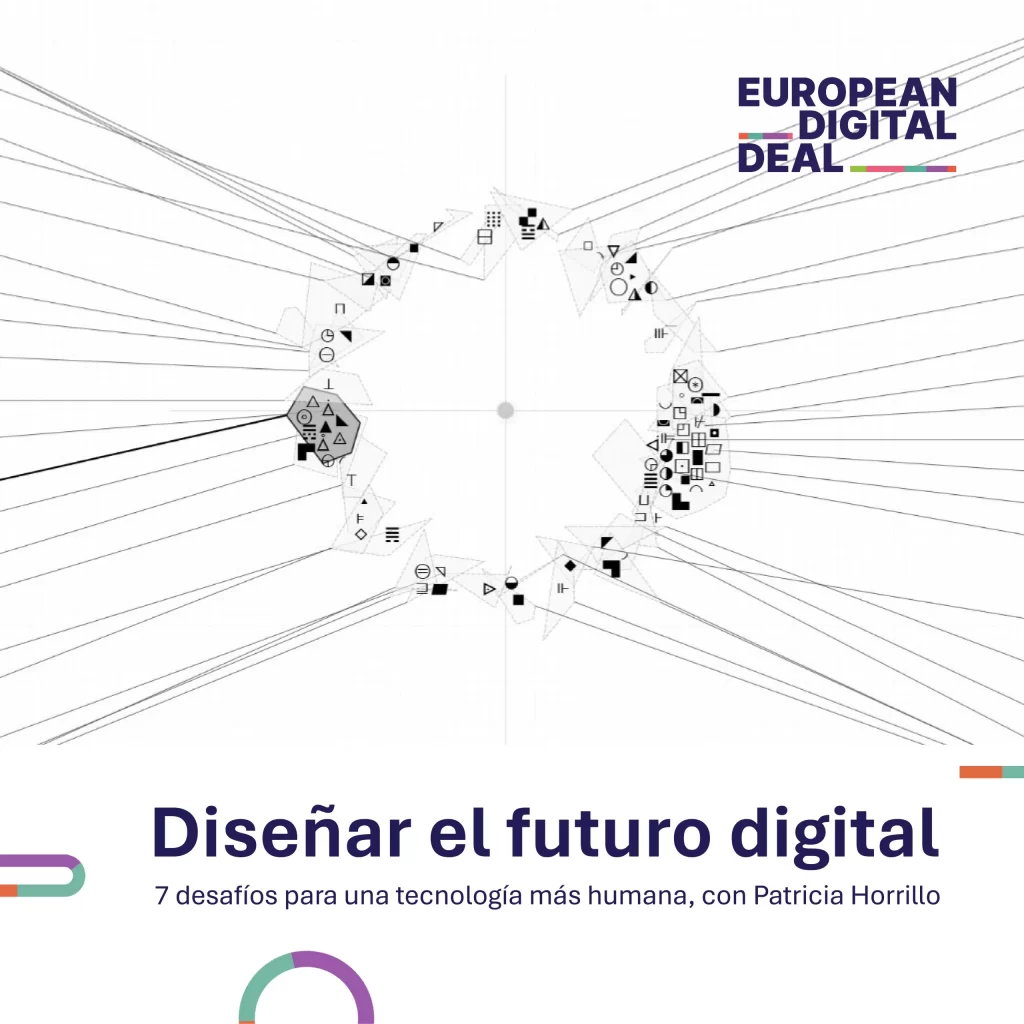
In his talk, entitled Designing the digital future: 7 Challenges to a More Humane Technology, Patricia started with a historical tour for the origins of the Internet from the 60s of the 20th century to the present, focusing on some dates where the tools that currently cross our lives emerged: email, browsers, social networks, Wikipedia ... Through the metaphor of the “Chinese room”, explained how the Generative AIs and what implications they have for citizens. Afterwards addressed the seven challenges identified by the European Digital Deal: education, regulation, democratic participation, technological sovereignty, transparency, inclusion and human rights. Finally, through questions about the challenges themselves, opened the debate on what technology we want to promote and how to transform the Internet of the future into a fairer, more diverse and people-centred place.

 English (UK)