
In April 1979 opened a time capsule that had been buried for a hundred years in San Francisco's Washington Square Park. On it, there was a pamphlet: California's Big Geysers and How to Get There and, in its storage, the following handwritten text:
If this little book sees the light after 100 years of burial, I would like its readers to know that the author was a lover of her own sex and devoted the best years of her life to fighting for political equality and for raising the social and moral status of women.
Laura from Force Gordon, lawyer and suffragette of the late nineteenth century, had written down a more than probable lesbian confession thinking, or trusting, that so many years later would be more propitious times for the free expression of sexual orientation. Or, at least, neither she nor her contemporaries would be there to see what was happening.
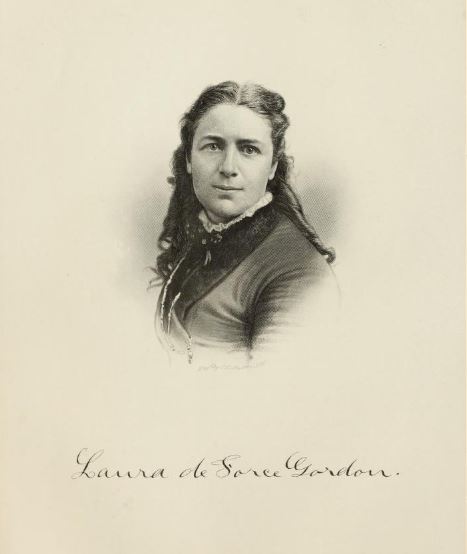
It is cruel, though not surprising, that such a thing happened. Y It is important that a Wikipedia biography is named. In this case it is done without much conviction, since it is added that it could have been an "idiosyncrasy of the speech of the nineteenth century" with a clarifying note that equates the forceful expression "lover of his sex" with, for example, being a lover of cats.
Looks like, Even today, it's hard to recognize that a woman was a lesbian.. Even someone who lived 150 years ago. It is amazing how to do it is still to include an uncomfortable paragraph in a biography, something that is better to ignore or overlook so as not to take away value from the person in question. As if only doubt, possibility, stains.
Laura from Force Gordon is no exception.
Whoever approaches today the history of the Spanish anarchist poet Lucia Sanchez Saornil (1895-1970) will probably have no doubt about his lesbianism. Of course in his Wikipedia article but also in other texts about it, his long relationship with America Barroso is named, Mery. Something that, at the time, was taken by his family as a "deep friendship". Although she considered that the way of living sexuality was a private matter and, in fact, did not pronounce herself on how to do it, He used a male pseudonym in his love poetry, probably as a strategy to address a female subject.. The curious thing, or not so much, is that for the first editor of his poetry, Rosa Martín Casamitjana, there is still doubt. He claims that it may be a reflection of his lesbian leanings but also a mere aesthetic creation. Again, the stain.
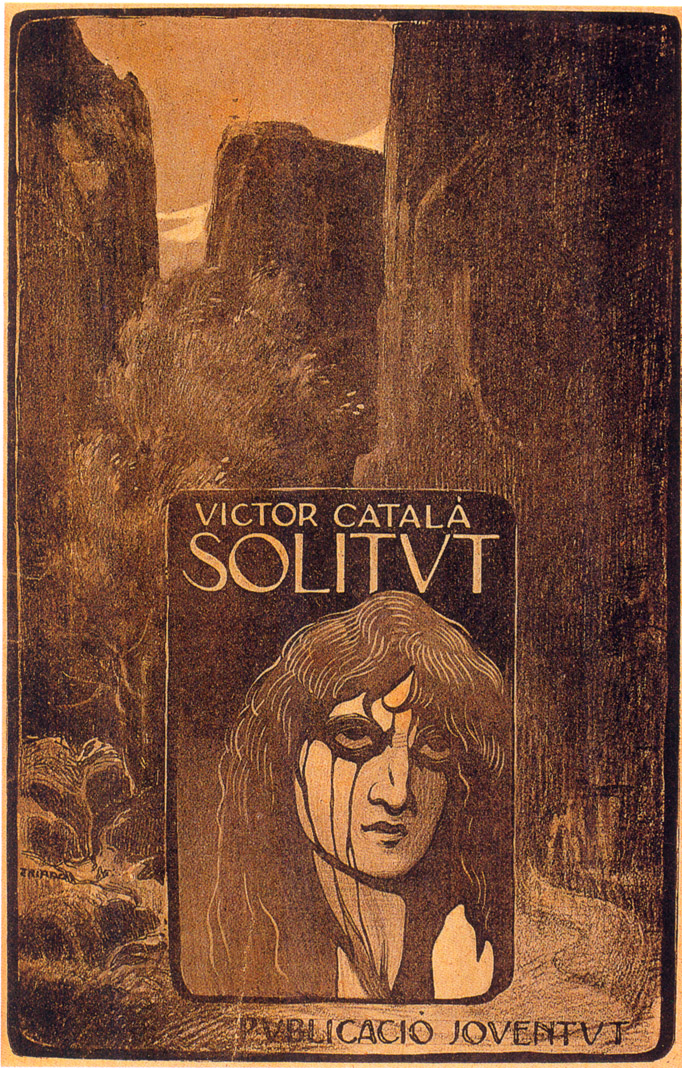
Sanchez Saornil was not the only writer to create a alter ego male in order to express his love or desire for another woman. Caterina Albert was a Catalan writer who signed with a male pseudonym: Victor Catalá.
In the last paragraph of his Wikipedia article, the following is said: ≪However, the persistent singleness and the expressive force described as "viril" led to a certain legend fruit of the surprise and discomfort of the critics before a woman who wrote so blatantly≫.
Somehow, your lesbianism is hinted at but you don't say the word, despite being the author of the story Carnestoltes (Carnival) in which the first lesbian character of Catalan literature appears, an extreme not mentioned in his article either.
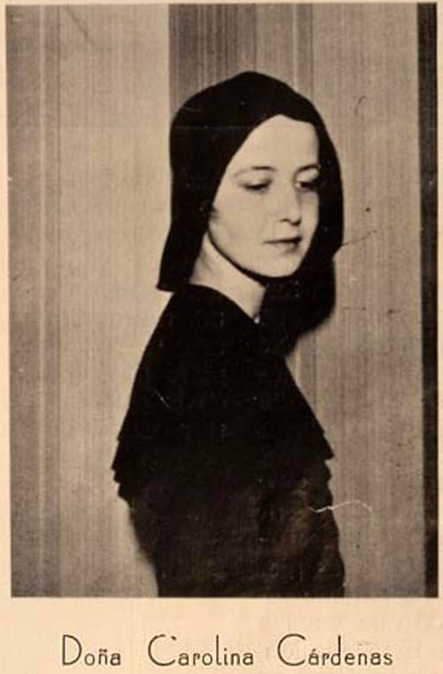
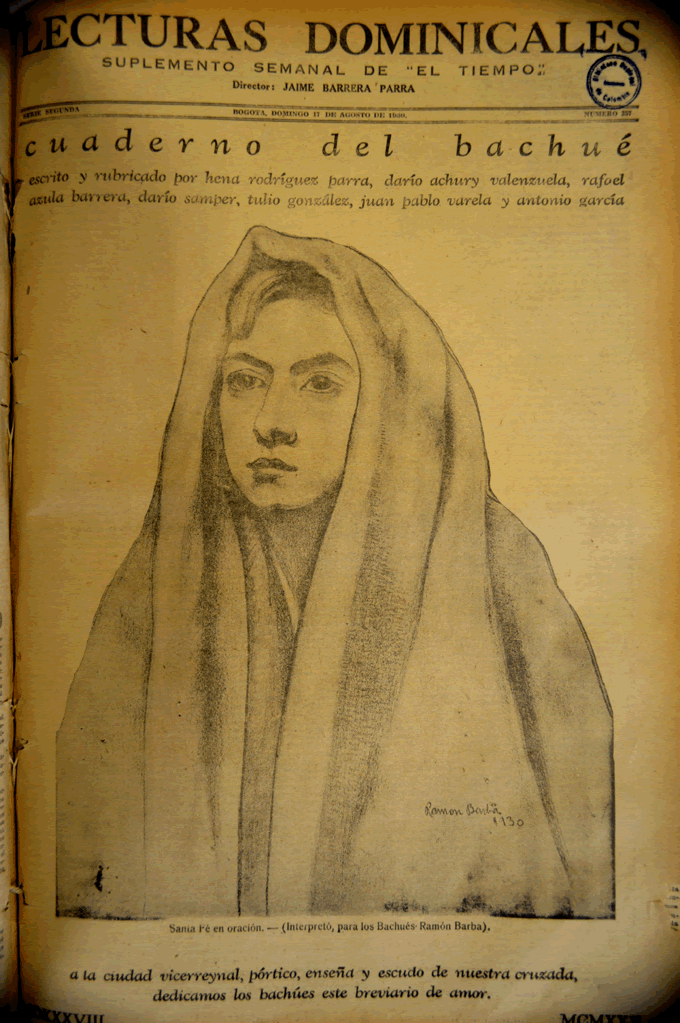
In the 1930s, two Colombian artists Carolina Cardenas y Hena Rodriguez, had, most likely, a love story. But, just as Hena Rodriguez's Wikipedia biography includes two lesbian categories, the text only names the possible relationship with Cardenas within the framework of a fictional novel. You, you delirious, by journalist Andrés Arias. In the biography of Carolina Cardenas exactly the same thing happens, there is only one reference to the relationship between the two when it appears named in the aforementioned novel.
The history of Wikipedia articles by these two artists is an example of how, In today's world, there are those who feel that this information must be erased from their lives, as if it stains them.. Before all the affirmations, or questioned, of the possible love relationship between Hena Rodríguez and Carolina Cárdenas, which have been included over the years in her articles, we find an enormous amount of reversions, a kind of struggle between editors (and editors, we are part of it) to explain or erase their possible lesbianism from their history.
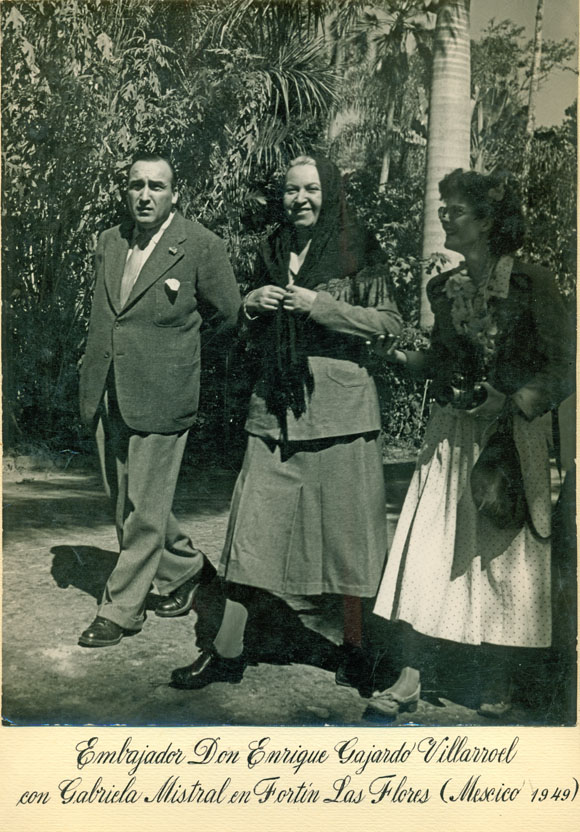
Gabriela Mistral (1889-1957) was the first person in Latin America to win a Nobel Prize in Literature. A character, undoubtedly, of enormous international relevance and reference figure in his native Chile, where it was National Prize of Literature. Reasons, perhaps, for scrupulously safeguard their image from any "spot".
The fact that she did not marry and was always accompanied by women gave rise to rumors from her youth. In his Wikipedia article there is a section on his personal relationships where it is explicit that he kept his personal life in strict reserve. There is talk of various relationships with men, although mostly Platonic dyes. From his secretary, Palma Guillén, with whom he lived and raised a nephew, nothing is named beyond being friends and confidants.
Finally, a subsection called "Gabriela Mistral and Doris Dana" names her lesbianism, although starting with the Denial itself of the same that the writer did:
Of Chile, to say the least. If I've even been hanged by that silly lesbianism, and it hurts me from a captivity that I can't say. Have you seen such falsehood? […] You don't want to go back to places in the world where you make a police novel with your own affairs. I am not an outcast; Nor is it an extraordinary thing. I am a woman like any other Chilean..
Gabriela Mistral (ca. 1945), in Blessed be My Language (edited 2002)
Later it is recognized that he had very intimate relationships with Doris Dana, although she would also deny it, and with other women. And it's analyzed your correspondence, such as the most important key to unveiling the intimacy of these links.
In her article she makes a fairly exhaustive list of those who believe that yes and those who believe that she was not a lesbian.. In all claims about his lesbianism there is reference. In those in which it refuses, in general, they do not wear it. More data is given, even alluding to the Sáfico Circle of Madrid, a group of lesbian friends with whom she related, and, in conclusion, it is recalled that when the civil union agreement was approved in Chile, which allowed the formalization of homosexual couples for the first time in the country, some verses of hers were used: You have to take care of this, Doris, love is a delicate thing.
So understandable is that the protagonists of this article denied their relationship at a time when doing so could even be dangerous, cOmo Legitimate that today we affirm it with all the information we have available.
Like Wikisphere, the community of publishers to which we belong, this is our work and our commitment to all of them: add that clarifying paragraph which, for many, is no longer uncomfortable but necessary.

 English (UK)


