

The past 28 October, as part of the course “Artificial Intelligence: inclusive data, transparent algorithms and collective intelligence to fight the future”, organised by Common Notions (Dream Traffickers), a session was held dedicated to exploring the centrality of data in the development of artificial intelligence and its social implications.
The day, which took place in the Athenaeum of La Maliciosa and was also streamed online, with the participation of Ivana Feldfeber Kisilevsky, co-founder of Gender Data Observatory of Latin America (DataGénero), and of Patricia Horrillo, journalist, Wikipedian and founder of Wikisphere.
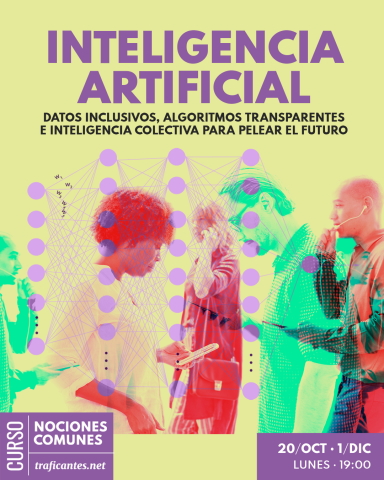
Other AI is possible
Ivana Feldfeber opened the meeting by putting on the table how algorithmic systems learn from huge volumes of information which are not neutral: the data reflect historical inequalities, gender biases and production conditions crossed by precariousness. From his experience in DataGender, showed strategies for build inclusive data policies and practices, capable of making violence and inequalities visible, and of contributing to the design of fairer public policies. He also shared the experience of AYmurAI, software that anonymizes documents, collects and makes available data from court rulings.
For its part, Patricia Horrillo placed the debate on the role of the common and collaborative knowledge in the age of artificial intelligence. Through the case of Wikipedia, explained how content produced collectively and voluntarily by thousands of people is used massively to train AI models, without recognition or redistribution of the value generated. His speech invited us to reflect on the plunder of the digital commons on the part of the big tech corporations and on the need for claim transparency, collective authorship and the common good as guiding principles in technological development.
You can listen to his speeches in this Audio.

 English (UK)