
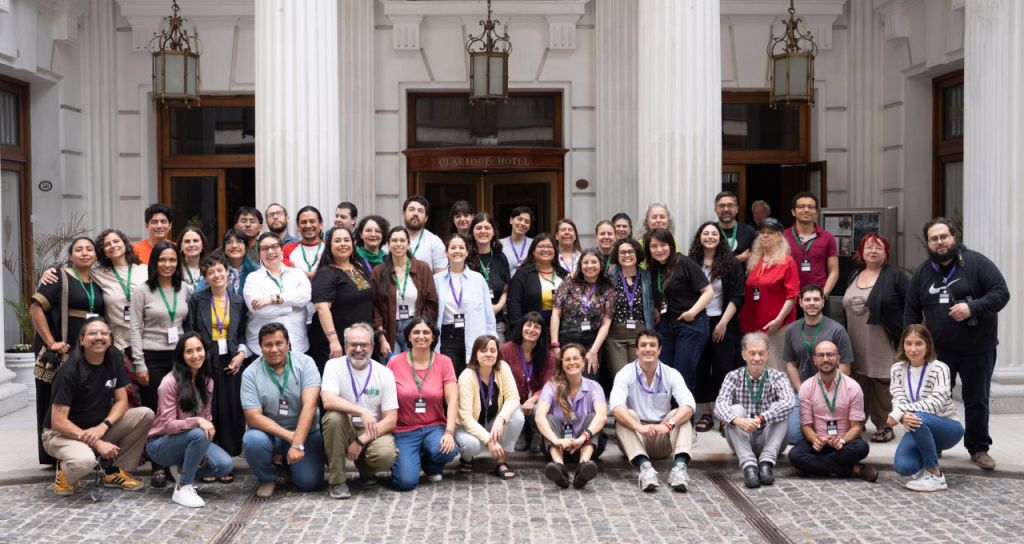
From 10 to 12 October 2025, the event was held in Buenos Aires (Argentina) on Meeting of the Spanish-speaking Community 2025, organized by Wikimedia Argentina and Wikimedia Mexico. On this occasion, they attended on behalf of Wikisphere our comrades Maria Sefidari (disambiguation) y Liliana Alviárez. It was a space to meet, share ideas and build together.
> About the meeting
This meeting was looking for define a common agenda, recognize key challenges, address strategic conversations, and collaboratively build solutions to strengthen the Wikimedia movement in Spanish. The program included talks, workshops and thematic tables on issues such as the positioning of the Spanish-speaking community within the movement, the participation of volunteers, the sustainability of communities, institutional strengthening, as well as external and internal challenges.
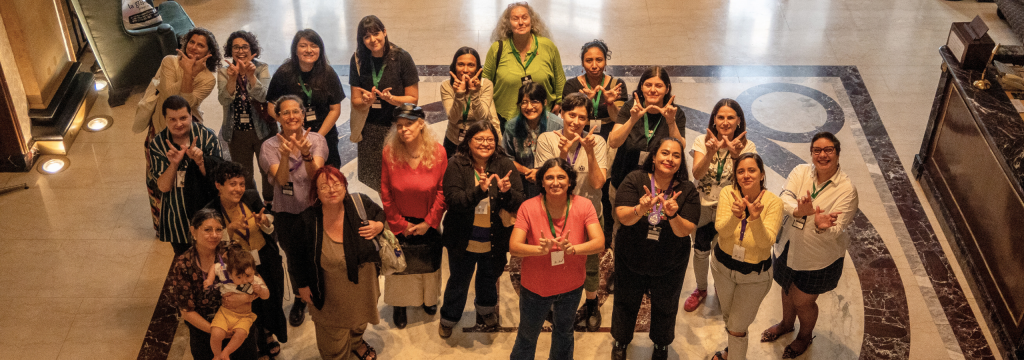
In addition, we take the opportunity to make a food with women present y discuss our particular challenges. We also enjoy cultural activities, such as a city tour inspired by The Eternaut and group dinners. The organization was brilliant, and from here we want to congratulate those who made all this possible and made us feel at home.
The attendees were representatives of Wikimedia Argentina, Wikimedia Mexico, Wikimedia Chile, Wikimedia Colombia, Wikimedia Peru, Wikimedia Spain, Wikimedia Brazil, Wikimedistas de Uruguay, Wikimedistas de Ecuador, Wikimedistas de Bolivia, Wikimedistas Wayúu, Wikiwomen Group of Users, Latin American Women on Wikimedia, Muj(lh)eres latinoamericanas en Wikimedia, WikiAcción Perú, WikiActivistas Litoral, Wiki UNLP, Wikiproject LGBT+, Euskal Wikipedia and Euskal Wikilarien Elkartea, in addition to the presence of members of the Wikimedia Foundation (WMF).

Liliana Alviárez and María Sefidari at the Meeting of the Spanish-speaking Community 2025 | For: Raystorm | CC BY-SA 4.0 Wikimedia Commons |> Our experience
Sharing with the community and finding common spaces is one more way to understand the movement, but even more so when we come together to create plans to face the present and the future in an articulated and strategic way. This meeting marked a new path in the strengthening the Spanish-speaking Wikimedia community, united by the same language and the same vision: “making free knowledge a tool for transformation and collaboration”.
The first day was dedicated to the external challenges, such as the Generative AI and their possible impact on our projects, as possible ways to tackle them. One of them was the use of human rights as a framework when dealing with these issues, since from an ethical point of view it is not possible to ignore the impact that IAgen has when it comes to consuming natural resources. Another external challenge discussed has been the Rise of Authoritarianism and how that can affect existing communities, as the very vision of making human knowledge accessible to everyone clashes head-on with the authoritarian precepts of information control and invisibility or destruction of unwanted knowledge. This can put editors at risk, and we talked about cases that have already occurred and how to articulate common responses in our contexts that go beyond asking the Wikimedia Foundation for help.
On the second day there was talk of the internal challenges, such as knowledge gaps. The gender gap continues to be one of the worst studied when determining whether there has been progress year by year, and a call for resources to be invested to measure more accurately and consistently whether the number of female editors and the number of articles related to women (and not just biographies) has been increasing or not, so that we can see whether the actions carried out are more or less effective. Statistics for 2024 were submitted indicating that: the 25th% of people on all Wikimedia projects are harassed The few resources available to victims were discussed.
It was reported that Wikimedia Foundation has recently decided to focus on users with extended rights, but the discussions did not finish seeing why this subgroup is now a priority compared to others, and related to the priorities of the English-speaking world, which are not necessarily the same as those of the Spanish-speaking world. This led to a debate on the Architecture of the Movement's Governance (or Global Majority), where the Spanish-speaking world is currently invisible. There are no Spanish-speaking people present in international decision-making spaces, and that means the disappearance of our realities and needs when discussing priorities and resources. It was emphasized that the same Spanish-speaking meeting we were in was initially questioned when the proposal was launched and was about to not be held, and when it has, it has been without the presence of the senior staff of the Wikimedia Foundation, which has attended meetings of communities of other speakers this year.
We argue that there are no neutral decisions, but that every decision is political by nature, and that those political decisions are already being implemented in the Movement. We gave two examples, one related to governance and the other to the distribution of resources.. In the first example, the Wikimedia Foundation has decided unilaterally not to ratify the Charter of the Movement (after the international community and affiliated groups did), it has also decided unilaterally withdraw from the selection process to the board of directors of the Foundation itself to a woman who had already passed the pre-selection by the affiliated groups (within days of the opening of the elections), and has decided that, instead of following the principles of decentralization found in the Charter and placing the Foundation on an equal footing with the affiliated groups, the priority should be to question the very existence of the affiliated groups despite the success of the model at international level. This is a pattern of behavior that has no semblance of going less.
On the other hand, in the international distribution of resources, it is a political decision Mexico is not part of the North American group, but of Latin America, which means that there are fewer resources for the entire region. In addition, there are the Northern and Western European Group, and the Eastern European Group (EEC), but There is no such thing as Southern Europe, which would specifically benefit Spanish-speaking and Lusophone groups.. These types of decisions made in spaces where we are not present impact the projects to which we belong and relegate our contexts and realities to the background, making us invisible and discarding us. Who decides that our regions can only have a 5% growth in a given year? People who are not in our regions and do not know what inflation can mean or be autonomous in a certain context. During the discussion, multiple formulas emerged to attend to these situations, from the political articulation to be present in these spaces to the creation of thematic and non-regional bags, or self-sustaining bags such as the endownment, and the move away from this model based on the exploitation of volunteering This has so characterized the Wikimedia Movement and has been, as discussed at the meeting, an immense barrier to entry for the most disadvantaged populations.
There was also talk of the need for rethinking metrics so rigid and typical of the English-speaking world, in which the only thing that matters is the number of editions, and that causes other metrics to be left out or considered less important despite being more directly related to the quality of contributions, retention of participants and efforts to build a stable and lasting community.
The meeting ended with a call to continue having (and continuing to insist on having) these face-to-face spaces where we can to focus on our realities and needs, and to try to articulate ourselves politically with a common strategic agenda. It was a very interesting and very productive meeting, and from here we want to express once again our gratitude to those who made it possible.
> Gallery
CC BY-SA 4.0 Wikimedia Commons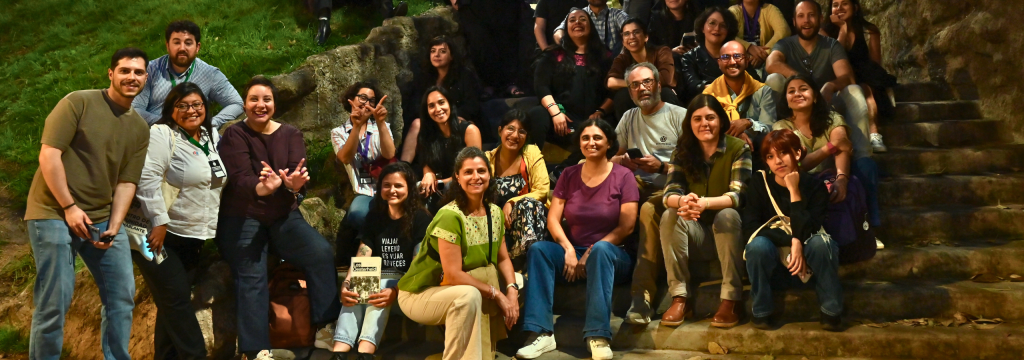
CC BY-SA 4.0 Wikimedia Commons
CC BY-SA 4.0 Wikimedia Commons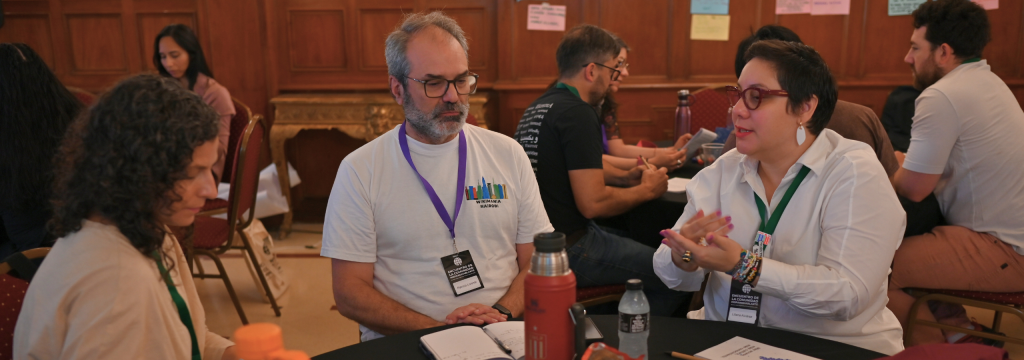
CC BY-SA 4.0 Wikimedia Commons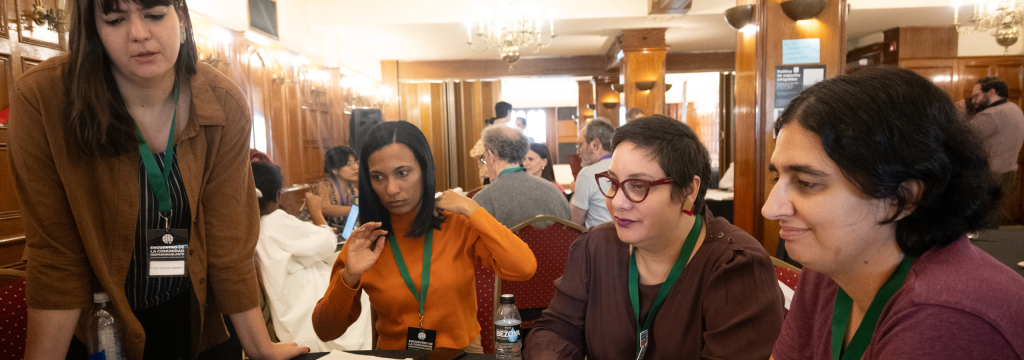
CC BY-SA 4.0 Wikimedia Commons
CC BY-SA 4.0 Wikimedia Commons
CC BY-SA 4.0 Wikimedia Commons
CC BY-SA 4.0 Wikimedia Commons* Credit header image: Group photo of the second day of the Meeting of the Spanish-speaking Community held in the Autonomous City of Buenos Aires, Argentina in 2025. | By: Josefina Gonzalez for Wikimedia Argentina | CC BY-SA 4.0 Wikimedia Commons |
 English (UK)