
[Published on 22 June 2016 in WikiEdu licensed CC-BY-SA]
Dr. McKenna is here. Elizabeth De Wolfe (@Prof_edewolfe) is a professor of History at the University of New England (United States). In its course "Introduction to Women and Gender Studies", students should expand the content on women on Wikipedia.
As a historian, Laurel Thatcher Ulrich said that famous phrase that “women who behave well rarely make history”. And, apart from in history, women (those who behave well and those who do not) are often absent from contemporary society. We see this in the lack of representation in Congress, the scarcity of statues of women in Chicago's public parks, the emoticons that reduce women to stereotypes, or the lack of female editors and content on Wikipedia. In my graduation course in the spring of 2016, ‘Introduction to women’s and gender studies’, the main objective was that students understand the origins and ramifications of gender invisibility, and seek ways to correct this invisibility of women's lives and achievements.
When I read about Wikipedia's male bias, something resonated with me. I realized that my students could connect class learnings with real-world action by writing posts about women on Wikipedia. What I wasn't aware of was the tremendous personal impact this project was going to have on them. In addition to discovering for themselves the nature of information in relation to gender, they managed to understand and use their voices to achieve change. This project empowered them.
The activity arose as a result of my participation in the seminar of the Faculty of Digital Humanities of the University of New England, as part of a three-year program funded by the University of New England. Davis Education Foundation. In the spring of 2015, I was one of four faculty members participating in the second of three small group seminars for that the Arts and Humanities delve into digital literacy. We read articles about the origin, goals and diversity of the digital humanities, and experimented with various technologies. As we read, we debated and discussed digital humanities and our own pedagogical methods in the classroom. And we each developed a project to put it into practice in the academic year 2015-2016.
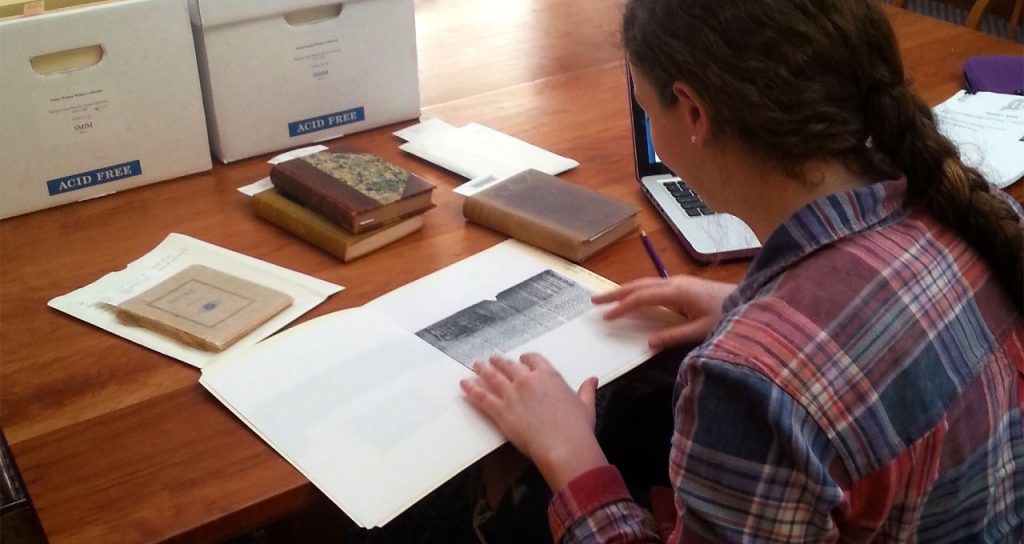
Case Studies, Curriculum Templates and Editing Guides for the Wiki Education Foundation (@WikiEducation) involved invaluable resources to develop this project. Tutorials and online brochures offered them a introduction on wiki philosophy as well as guidelines on creating Wikipedia entries. The students used these materials and then transitioned to writing, editing, and publishing a Wikipedia article. Workshop days in the classroom were devoted to identifying topics for their entries (helped by reference librarians and special collections from the university). In a second workshop, they wrote and edited entries and, in the last moments of checking, helped each other to solve the technical problems that had arisen.
Let no one doubt that Researching and writing an entry for Wikipedia was as rigorous as for any job in the quarter.. The students proposed formal topics and presented bibliographies, carried out research with academic and authoritative sources, wrote several drafts and received suggestions from their classmates and their teacher. While digging into Wikipedia and conducting their research, they identified key concepts of the course such as male privilege and gender language.
The experience of my students
They were surprised to find that, On Wikipedia, a man's achievements often overshadow his wife's equally laudatory achievements.. One of the students, Emma Steinbach, said about the sexologist Bonnie Bullough: Her work was as important as her husband's, and it was time for her to be mentioned on her own merits and not just in relation to him.. Similarly, Abby Lachance, modifying the entry about the author and Arctic adventurer Josephine Diebitsch Peary, noted: One thing that struck me about the original article was that most of the little information there was about her husband.. Writing a new post about the lawyer Gail Laughlin, Megan Galley concluded: ‘A woman who achieved as much as she should have been on Wikipedia for a long time.’.
Those who were interested in careers related to health professions, pledged to do posts about the first female doctors and discovered a lot of scarcity of information. I had never thought about how the medical profession has been fundamentally patriarchal throughout history, with women holding separate positions and inferior to men, which makes me want to change that in the future., he said Kathryn Cawley. Psychology students, looking at the history of their own future careers, saw a similar lack of attention to women. Jacqueline Parents stated: We've helped bring to light the life and contributions of a woman, which is just part of a larger project to bring many women to the same level of visibility as men. This is of incalculable value..
They also saw how their efforts could grow beyond the classroom: I don't mind someone on Wikipedia editing my article. As long as the modifications provide more information, more sources or go deeper into Sara's life (Roosevelt) it will be a positive thing. argued Jaymi Foster.
The project also boosted acquire new skills for those who felt more insecurities. Meghan Gould He wrote: Before this work, I was envious of people who knew how to edit and publish articles on Wikipedia. And now... I'm proud to have learned to do it myself.. They were proud to have contributed significantly to the body of knowledge about women's history, and that their efforts had the potential to affect others. I feel that I have succeeded in knowing that with my contributions I am editor of one of the largest sources of information online., he said Kathryn Cawley. Maybe the next thing is that I become a writer and have published my own book on the history of women in medicine. Or, better yet, to get into the medical profession and make history, about which prospective students will write Wikipedia articles about..
Although there have been times when I have seen how my students are transformed by individual research projects, The sense of collective power and passion in this class was unlike anything I had experienced before.. Students They saw the world and themselves in a new way, sharing their knowledge publicly, having greater self-confidence and feeling able to use their voices to raise awareness and make changes..
Briana Goud, which created a new entry about the author and philanthropist Margaret Jane Mussey Sweat pointed out the power of this class project: As a woman, I felt connected to the subject of my study, and I wanted to explain his life and achievements on a page that could be seen all over the world... from one woman to another. As researchers, we are connecting our academic knowledge and our freedom of expression to highlight the importance of historical women.“.

 English (UK)